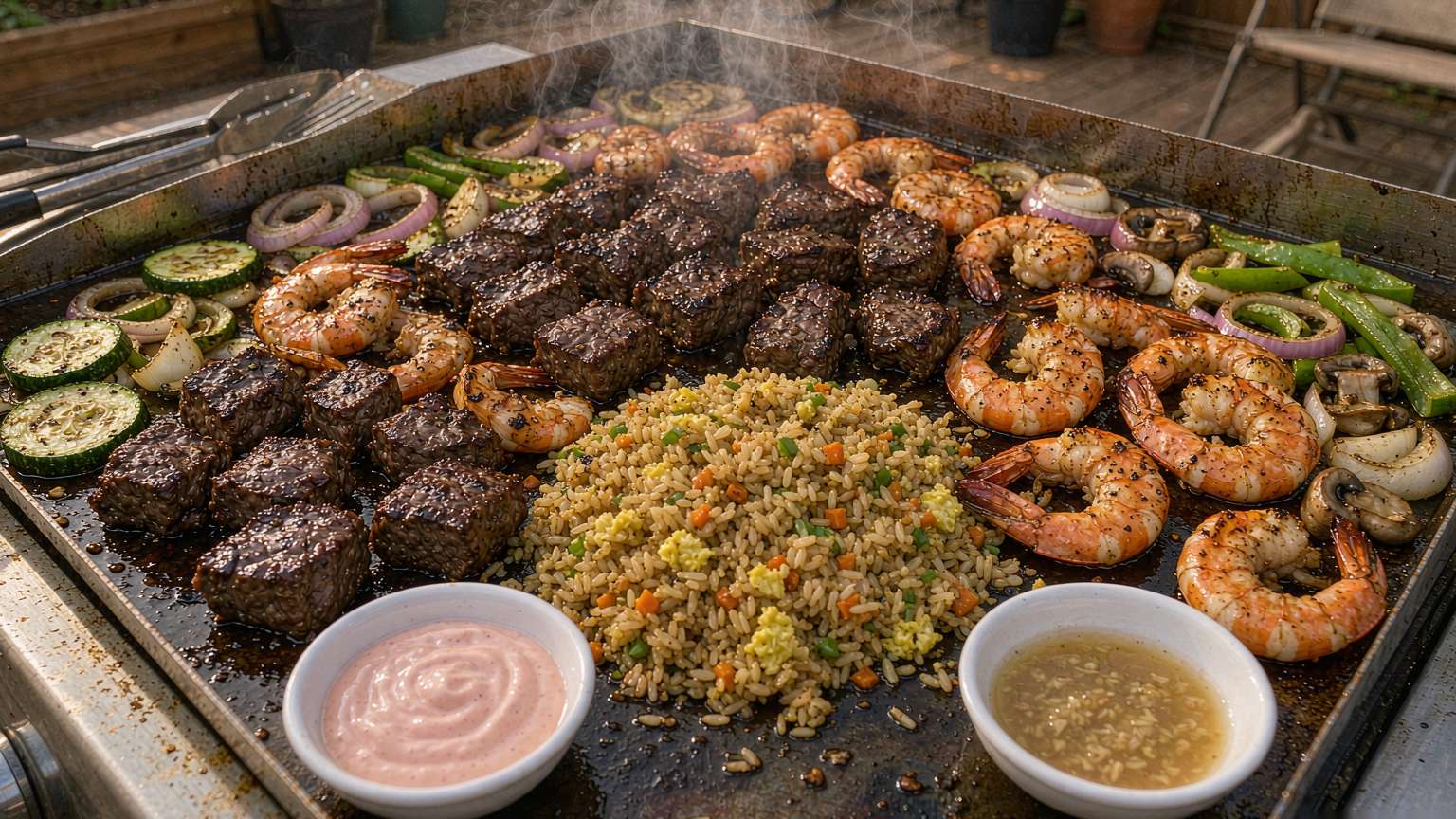
If you have never hosted hibachi at home, the menu can feel like a mystery until the chef starts flipping spatulas. Here is the complete hibachi menu explained — every protein, side and sauce, and how it all fits together for an at-home hibachi party in Orange County.
How a Hibachi Meal Is Structured
Every guest gets the same backbone: a protein (or two or three), hibachi fried rice, grilled vegetables, a garden salad with ginger dressing, and signature sauces — all cooked fresh on the flat-top grill in front of you. The difference between packages is simply how many and how premium the proteins are.
The Proteins
- Chicken — the crowd-pleaser. Bite-sized, grilled with garlic butter, the safest pick for kids and picky eaters.
- Steak — usually NY strip, cubed and cooked to order. Ask for medium-rare; the flat-top does it beautifully.
- Shrimp — the showpiece protein: butterflied, seasoned, and famous for the tail-toss catch.
- Salmon — glazed and grilled, a lighter option that pairs well with the ginger sauce.
- Scallops — Premium package territory; sweet, seared quickly so they stay tender.
- Tofu — pressed and crisped on the grill, the plant-based anchor of the vegetarian menu.
- Lobster tail and filet mignon — the Luxury package duo, plus one more protein of your choice. This is the milestone-celebration tier.
Classic includes two proteins per person, Premium three, and Luxury builds around lobster and filet. See the exact breakdowns on the menu and pricing page.
The Sides
- Hibachi fried rice — the signature side: rice, egg, vegetables and garlic butter finished on the grill. On the flat-top it picks up the flavors of everything cooked before it, which is why hibachi fried rice tastes different (better) than takeout.
- Hibachi noodles — a Premium/Luxury upgrade; softer, soy-buttered and popular with kids.
- Grilled vegetables — zucchini and onions at minimum, often mushrooms, broccoli and carrots. Simple, buttery, and a reliable way to balance the meal.
- Garden salad — crisp greens with the pale-pink ginger dressing that regulars ask extra for.
The Sauces
Sauces are what people remember, and every hibachi menu revolves around four:
- Yum yum sauce — the creamy, slightly sweet pink sauce. Technically not Japanese in origin, but it is the most-requested hibachi sauce in America. Great on everything, especially steak and rice.
- Ginger sauce — bright, thin and savory; the traditional pairing for chicken and vegetables.
- Garlic butter — less a sauce than a philosophy: it goes on the griddle first and flavors everything after.
- Teriyaki — sweet-savory glaze for guests who want a bolder finish.
Dietary Needs: Easier Than a Restaurant
Because everything is cooked to order in front of you, at-home hibachi handles restrictions gracefully:
- Vegetarian/vegan: tofu plus double vegetables and fried rice cooked in a clean zone on the grill.
- Gluten-free: possible with soy-sauce swaps — just tell the chef when booking, before shopping day.
- Kids: plain chicken or steak, plain rice, no sauces — the chef will plate a simplified meal without being asked twice.
Building Your Group’s Order
The practical formula for a balanced party: let each guest pick their proteins, add one appetizer round (gyoza or edamame) for the table, and trust the chef on sides. Collect choices with a group text before the final headcount — the chef shops fresh for every event, so an accurate protein tally is the single most useful thing you send in.
Ready to turn this menu into a backyard show? Book your date here — and if you are planning a birthday or a company night, the occasion pages break down how each type of party runs, course by course.
Ready to book your hibachi party?
Private chefs, live teppanyaki and full catering across Orange County. From $60 per person.