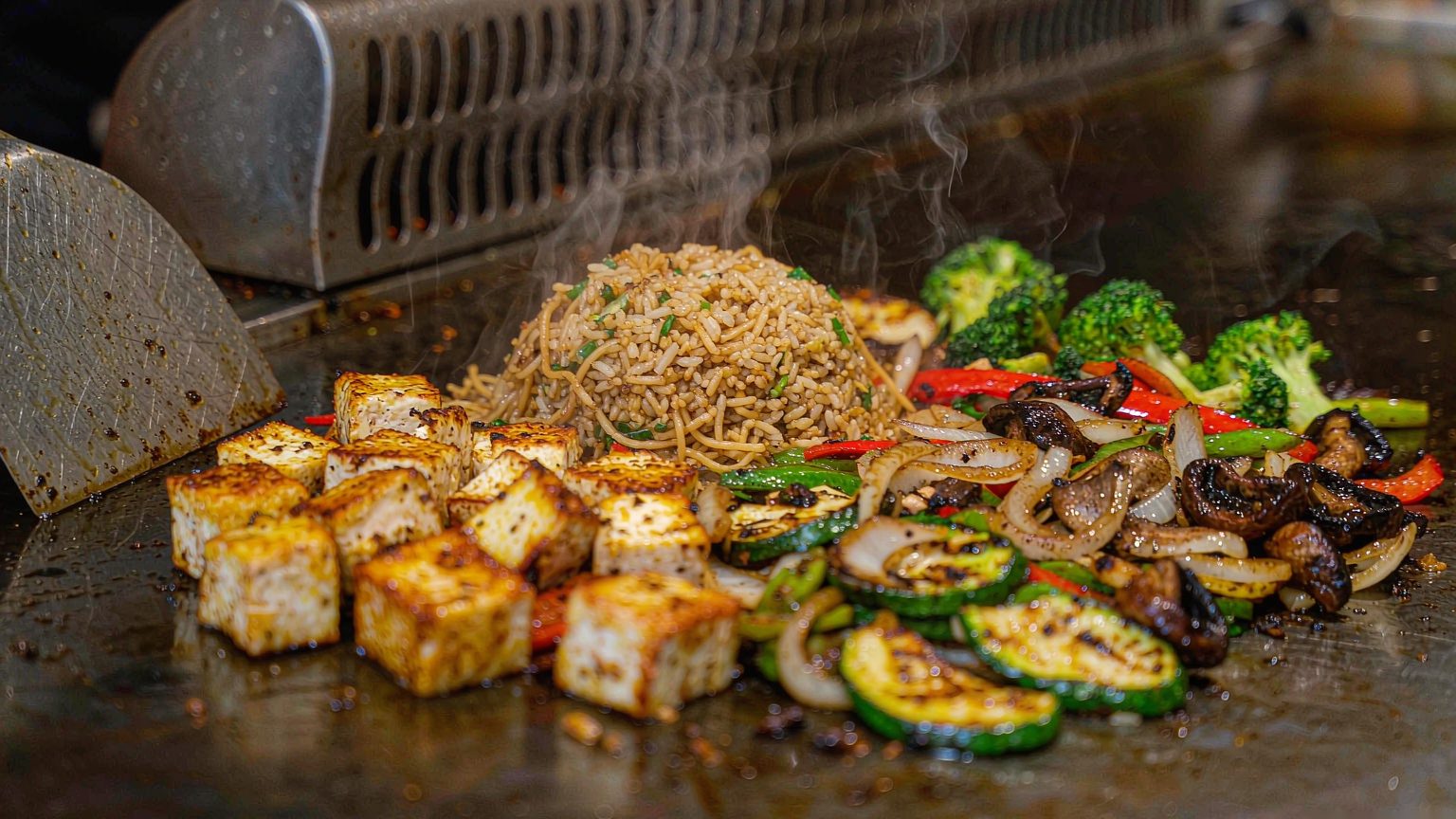
Vegetarian hibachi sounds like an oxymoron. The whole ritual is built around steak, shrimp and lobster tails hitting a screaming hot griddle. But the truth is that a teppanyaki flat-top is one of the most vegetarian-friendly cooking surfaces in existence — and at an at-home party, the plate that comes off the grill is designed around whoever is eating it. Here is what vegetarian and vegan hibachi actually looks like, what swaps cleanly, which sauces to ask about, and how to host a mixed-diet group without making the plant-based guests feel like an afterthought.
Why a Flat-Top Grill Is Great for Vegetables
Restaurant teppanyaki and at-home hibachi both rely on a large, flat, very hot steel surface with a thin film of oil. That setup does two things vegetables love:
- High, dry, direct heat. No boiling, no steaming, no waterlogged texture. Zucchini, onion, mushrooms and peppers get a proper sear with caramelized edges in a couple of minutes.
- Simultaneous cooking. Your chef can run a vegetable section alongside the proteins, so vegetarian plates come off the grill hot and fresh at the same pace as everything else — not twenty minutes later from the kitchen.
That last point is the real advantage. The reason vegetarian guests often get shortchanged at restaurants is timing and logistics. At home, the grill is right there and the chef is working it live.
The Vegetarian Core: Tofu and the Vegetable Course
Grilled tofu done properly
Tofu is the natural protein swap on a hibachi menu, and on a flat-top it can be genuinely excellent — pressed firm or extra-firm tofu cubed and seared until the edges crisp and the center stays soft. It takes on the same soy-garlic-sesame seasoning profile the grill is already using, which means it does not taste like a substitute. It tastes like the same cuisine, minus the meat.
A practical note for hosts: mention tofu when you book, so the chef buys it specifically. It is not something to spring on the shopping list on party day.
The classic hibachi vegetable lineup
Standard hibachi vegetables are already almost entirely plant-based, which is why vegetarian hibachi works so easily. Expect a rotating mix of:
- Zucchini and squash, cut into half-moons
- Yellow onion, often cut into thick rings or petals
- Mushrooms — button or cremini
- Bell peppers in mixed colors
- Broccoli florets
- Carrots, sliced thin
- Occasionally snow peas, asparagus or bok choy
The vegetable course arrives as its own plate on most hibachi menus, and it is not a sad side dish. Given a hot enough surface and a little soy and garlic, it holds up next to anything coming off the grill.
Vegan Hibachi: The Details That Matter
Vegan is a short step further than vegetarian, but it depends on a handful of ingredients that are easy to overlook. Ask your chef directly about each of these:
Butter and oil
Traditional hibachi grilling uses butter for flavor and finish. Vegetable oil or a plant-based spread swaps in cleanly, but the chef needs to know in advance so the oil bottle on the station is the right one. This is the single most common vegan pitfall at hibachi.
Egg in the fried rice
Hibachi fried rice is traditionally cooked with egg, and it is often finished with butter. For vegan guests, ask for a rice portion cooked without egg and with oil instead — usually prepared as a small dedicated batch. It is a simple request made at booking, and almost impossible to fix once the rice is already tossed on the griddle.
Dairy in the sauces
Yum yum sauce is mayonnaise-based, which means egg — not vegan. Ginger sauce and garlic sauce are typically soy, vinegar and aromatics based, which are usually vegan-friendly and often the better choice for a plant-based plate anyway. Confirm with your chef rather than assuming.
Noodles and gluten
Hibachi noodles are generally wheat-based, so they are not gluten-free. For gluten-free guests, the grilled rice, vegetables and proteins are usually the safe path — provided the soy sauce used is gluten-free or tamari. Regular soy sauce contains wheat. This is worth flagging at booking for anyone with celiac disease or a serious intolerance, since it changes both the shopping list and the seasoning station setup.
Mixed-Diet Groups: How One Grill Handles Everything
Most party guest lists look like this: a couple of vegetarians, one vegan, one gluten-free, one person who does not eat shrimp, and everyone else ordering the steak. This is a completely normal hibachi booking, and it is handled routinely. What makes it work is information arriving early.
- Collect dietary needs at the same time you collect protein choices. One group text, one signup sheet, one clean list.
- Give the chef the count, not just the request. “Two vegetarian, one vegan, one gluten-free” tells the chef exactly how much tofu, how much rice to reserve and which oil to bring.
- Note whether vegetarian guests want full portions or a lighter plate. A full vegetarian plate is a real meal, not a garnish.
- Flag allergies separately from preferences. A shellfish allergy is a safety issue, not a menu preference, and it changes how the grill is cleaned and sequenced.
The full menu and pricing page lists what each package includes; vegetarian and vegan adjustments fit into the same package structure rather than acting as a paid upgrade.
What It Costs (and What It Does Not)
Dietary swaps do not change package pricing. The published rates are per person regardless of whether that person is eating filet mignon or seared tofu:
| Package | Per Person | Vegetarian / Vegan Fit |
|---|---|---|
| Classic | $60 | Tofu or vegetable plate, two-protein structure adapted |
| Premium | $80 | Expanded vegetable selection, third protein slot |
| Luxury | $100 | Premium sides and full service; plant-based plate built to match |
Also worth knowing: children ages 6–12 are $30 each and children 5 and under are $5. There is a $600 minimum order and a $50 deposit to hold your date, and groups of 10–20 guests save $50, 21–30 save $100 and 31–40 save $200. A family party with a couple of vegetarian guests still books and discounts exactly like any other group.
Vegetarian Hibachi Beyond Tofu: Ideas Worth Requesting
If your chef knows in advance, the vegetable plate can get more ambitious:
- Grilled portobello caps — meaty texture, excellent on a flat-top.
- Teriyaki-glazed cauliflower or broccoli — the glaze is exactly what makes hibachi chicken taste the way it does, applied to vegetables.
- Garlic-ginger eggplant — soaks up sauce beautifully with direct high heat.
- Grilled corn with the same seasoning profile — a crowd-pleaser that both vegetarians and meat eaters will fight over.
- Tofu and vegetable combo plate — the full hibachi experience, not a compromise on one axis or the other.
How to Ask for It When You Book
When you book your hibachi chef, include four details in your message and the dietary side of your party is solved before it starts:
- Total guests, with the adult-to-child split
- How many are vegetarian, vegan or gluten-free
- Any allergies, especially shellfish
- Protein choices for the remaining guests
Do it at booking, not on the day. Your chef shops fresh for every event, which is what makes real ingredient-level accommodations possible — but only if the list is in hand before the shopping trip. Set at an at-home hibachi party in Orange County, a well-briefed vegetarian plate holds up next to the steak, the shrimp and the flame. Nobody at the table should be eating an apology.
Ready to book your hibachi party?
Private chefs, live teppanyaki and full catering across Orange County. From $60 per person.